
Park golf started with a simple idea in Makubetsu, Hokkaido, in 1983. Instead of building another complicated sport that required expensive equipment or a high level of skill, its creators wanted something that people of different ages could enjoy together in an ordinary park.
That little idea turned into a sport of its own.
Today, Japanese park golf is played across the country and has also spread beyond Japan, including to North America. The game still has the simplicity that made it appealing in the first place: one club, one ball, a compact course, and plenty of time to enjoy being outside.
Here are five facts about park golf in Japan that help explain where the game came from and why it has lasted for more than four decades.
1. Park golf was born in Hokkaido in 1983
The first fact is also the most important one because it tells you something about the personality of the sport.
Park golf was created in Makubetsu, Hokkaido, in 1983. The Nippon Park Golf Association identifies Makubetsu as the birthplace of the game and describes park golf as a community sport created that year.
The original idea was remarkably practical. Local people were looking for a way to make better use of available green space and create a recreational activity that people could enjoy close to home.
The first course was the Tsutsuji Course in Makubetsu. According to information from the Nissho Peninsula tourism organization, the course was created by Makubetsu town employees who dug holes in a park to establish the new community sport.
There is something rather charming about that origin story. Park golf did not begin as a luxury resort concept or as an attempt to reinvent professional golf. It started with people looking at a patch of grass and thinking that it could become a place where the community spent time together.
The name followed the idea. Golf played in a park became “park golf.” The Nippon Park Golf Association still describes the name as coming from the fact that the game began in a park.
That connection to ordinary outdoor spaces remains an important part of the sport today.
2. It was designed so three generations could play together
This is one of the most interesting things about the history of park golf.
The game was never meant to be simply a shorter version of traditional golf. Its purpose was to create an activity that could bring children, parents, and grandparents onto the same course.
That idea continues to shape how the sport is described in Japan. A park golf facility in Yamanashi, for example, describes the game as having been created so that parents, children, and grandchildren could casually enjoy it together.
That helps explain some of the choices that make park golf different from traditional golf.
There is only one dedicated club. The ball is larger than a standard golf ball, and the courses are compact enough that players do not need to spend hours walking between widely separated holes. The rules are based on the basic idea of golf, but the equipment and course are designed to make the game much easier to approach.
The result is a sport where someone who has never played golf can join a group without needing to spend weeks learning the basics first.
That does not mean experienced players cannot take it seriously. Park golf has competitive play and organized tournaments, but the entry point remains remarkably friendly.
In fact, the International Park Golf Association of America describes the sport as something that can be enjoyed by multiple generations and across different ability levels.
There is a useful lesson in that. Sometimes the best way to make a sport more social is not to remove the game itself, but to remove the things that make people feel they need to be good at it before they are allowed to have fun.

3. The equipment is so simple
You need one dedicated club and one ball.
That is essentially the starting point.
The Nippon Park Golf Association specifically highlights the limited equipment used in the sport, while the International Park Golf Association of America notes that the game uses specialized clubs and balls designed for park golf.
The simplicity is not an accident. It is part of the design philosophy.
A beginner does not have to stand on the first tee wondering whether they should be using a 7 iron or a hybrid. There is no decision about which club will work best for a particular distance. You learn one swing with one club and gradually figure out how to control it.
That makes the first few holes much less intimidating.
It also changes the social side of the game. When everyone has the same basic equipment, the focus naturally shifts away from what somebody owns and toward what happens during the round.
And yes, the ball can still find some surprisingly creative routes.
4. Park golf became much bigger than the park where it started
This may be the biggest surprise for anyone discovering the sport for the first time.
Park golf is not simply a quirky activity that exists in one corner of Hokkaido.
It grew throughout Japan and eventually crossed national borders.
Different sources report different numbers depending on whether they are counting individual courses, course locations, or affiliated facilities, but more than 1,000 park golf courses have been reported in Japan. One industry source, for example, has cited 1,283 courses across 347 locations.
The sport is particularly established in Hokkaido, where its history began, but it can now be found in many other parts of Japan. The official Nippon Park Golf Association maintains a national course directory, illustrating just how far the sport has spread from its original seven-hole beginning.
It has also developed outside Japan.
The World Park Golf Federation describes park golf as a sport that has expanded from its roots in Makubetsu to countries including Korea, China, Mongolia and parts of Southeast Asia.
North America has its own growing park golf community as well. The International Park Golf Association of America says it is officially recognized by the Japan Park Golf Association and the International Park Golf Federation.
So the evolution of park golf is a little unusual. It began as a local community recreation idea, became established across Japan, and then started developing into an international sport.
That is quite a journey for something that started with a lawn and a few holes.
5. The rules are simple, but the game can still be surprisingly competitive
One of the easiest misconceptions about park golf is that “easy to learn” must mean “nothing to figure out.”
The basic objective is familiar to anyone who has played golf: get the ball into the hole in as few strokes as possible.
The difference is that park golf simplifies the equipment and playing environment around that basic idea.
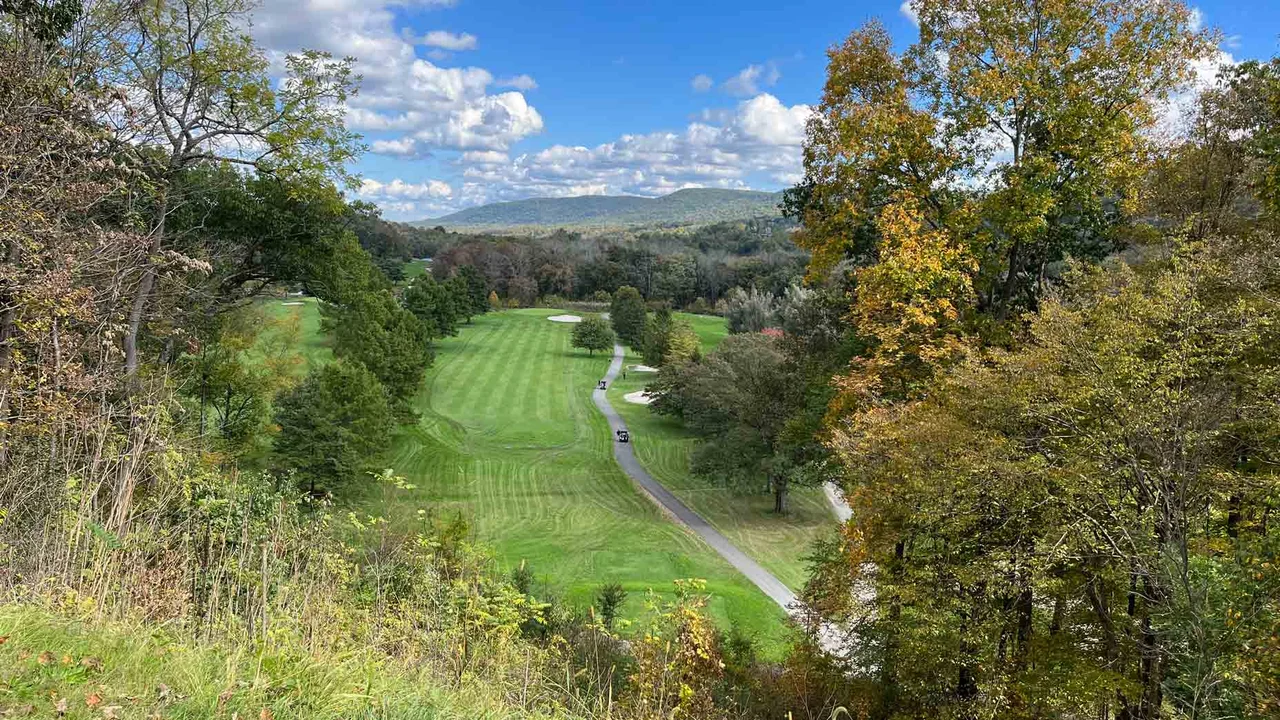
Courses are compact, and official course standards are built around relatively short holes. The IPGAA, following Japanese park golf standards, notes that individual holes can be up to approximately 110 yards, while a nine-hole unit is designed to stay below 550 yards.
Players still have to think about distance, direction, terrain and the next shot. A good approach can set up an easy finish, while an overconfident swing can create an awkward second or third shot.
The Nippon Park Golf Association highlights the appeal of a hole in one and specifically notes that playing with four people can make the game more enjoyable.
That combination is part of what makes the sport interesting. A first time player can understand the objective almost immediately, while a more experienced player can keep working on technique and score.
If you want to understand how the game works before trying it, the park golf rules provide a straightforward introduction to the basics.
Why is golf popular in Japan?
The history of park golf also raises a bigger question: is golf popular in Japan?
Yes, golf has a long and established presence in Japan, with traditional golf courses and driving ranges found throughout the country. Park golf exists alongside that culture rather than replacing it.
Park golf was not created because traditional golf stopped being popular. It was created because there was room for another type of golf experience, one that could take place in smaller spaces and welcome people who might not otherwise consider themselves golfers.
The two formats can appeal to very different occasions.
A traditional round might be something a golfer plans carefully, while park golf can be an afternoon activity with friends, a family outing, a community event or simply a reason to spend some time outside.
What makes Japanese park golf different from traditional golf?
The easiest way to understand park golf is to look at what it keeps from golf and what it leaves behind.
It keeps the basic challenge of hitting a ball toward a target and completing each hole in as few strokes as possible.
It simplifies almost everything around that challenge.
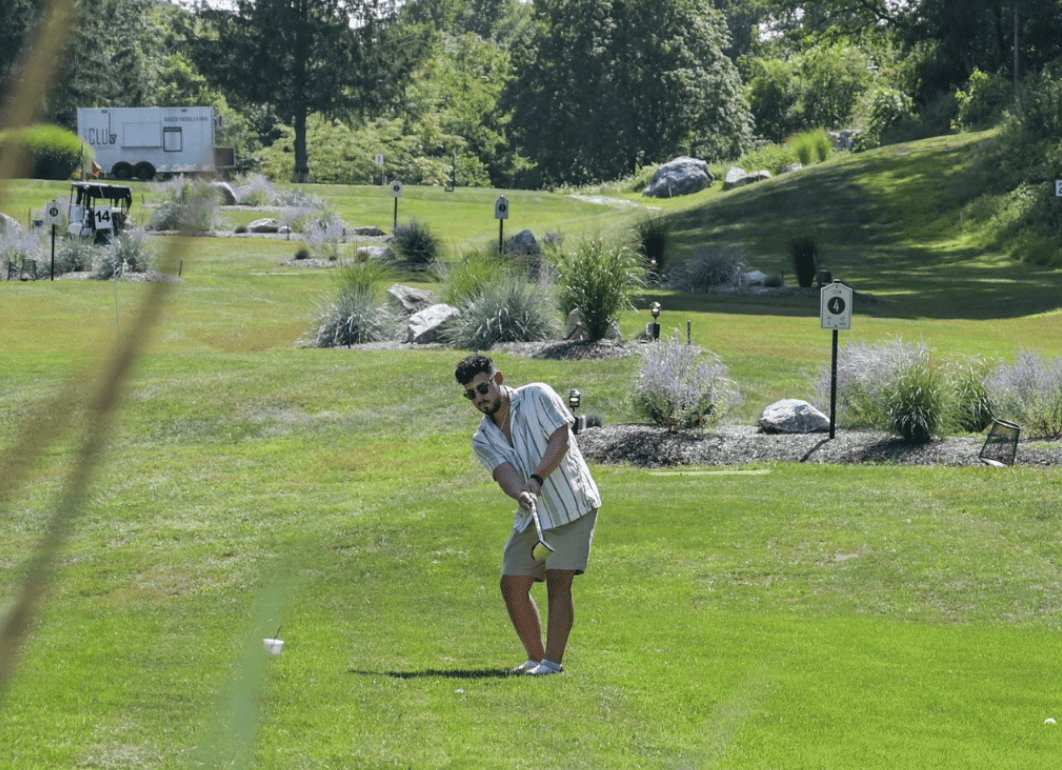
There is one club instead of a full set. The ball is larger. Courses are much shorter. The environment is generally more relaxed, and the game is designed around accessibility and social play.
That does not make park golf “better” than traditional golf. They are simply different experiences.
Traditional golf has its own appeal, especially for players who enjoy the technical depth, longer courses and variety of clubs. Park golf offers something different for people who want to get outside, play a game quickly and share the experience with others.
Why the history of park golf still matters today
The sport was designed around a fairly timeless idea: make it easy for people to spend time together outside.
That idea still works.
Families can play together without everyone needing the same level of experience. Friends can compete without turning the afternoon into a serious sporting commitment. Someone who has never played golf can pick up a club and understand what they are trying to do within minutes.
And there is something particularly appealing about a sport whose original purpose was community recreation rather than exclusivity.
The game has certainly evolved since 1983. Courses have become more sophisticated, organized competition has developed, and park golf has traveled well beyond Hokkaido. Yet the basic idea has stayed remarkably intact.
Park golf comes to New Jersey
The history of Japanese park golf might seem a long way from New Jersey, but the basic appeal travels surprisingly well.
At 1Club, players in Vernon can experience park golf in a setting designed around the social side of the sport. The course brings the compact format outdoors, with a relaxed atmosphere that makes it suitable for beginners, families, friends and group outings.
The 1Club New Jersey location gives players a chance to experience the format without needing to arrive as golfers. You do not need a collection of clubs. You do not need years of experience. You simply learn the basics, get outside and start playing.
That makes the Japanese origins of the sport feel surprisingly relevant in New Jersey. The circumstances may be different, but the appeal is familiar: a simple outdoor game that gives people a reason to spend a couple of hours together.
If you want to understand the format before visiting, the about park golf page explains how the sport works and what makes it different from traditional golf.
Read More: Why New Jerseyans prefer activities under 90 minutes